

21 Cozy Winter Decor Ideas to Make Your Home Feel Warm
Winter is the perfect season to make your home feel softer, warmer, and more inviting. You don’t need a complete makeover to create that cozy atmosphere. A few thoughtful changes, such as layered blankets, warm lighting, natural wood, seasonal greenery, and textured accessories, can make everyday rooms feel much more comfortable. The key is to build warmth through a combination of color, texture, lighting, and placement rather than filling every surface with decorations. From simple apartment-friendly updates to more polished living-room arrangements, these cozy winter decor ideas offer practical ways to refresh your home for the colder months. Choose a few that fit your existing style and let the rest of the room remain calm and functional.
Layer Chunky Knit Blankets on the Sofa
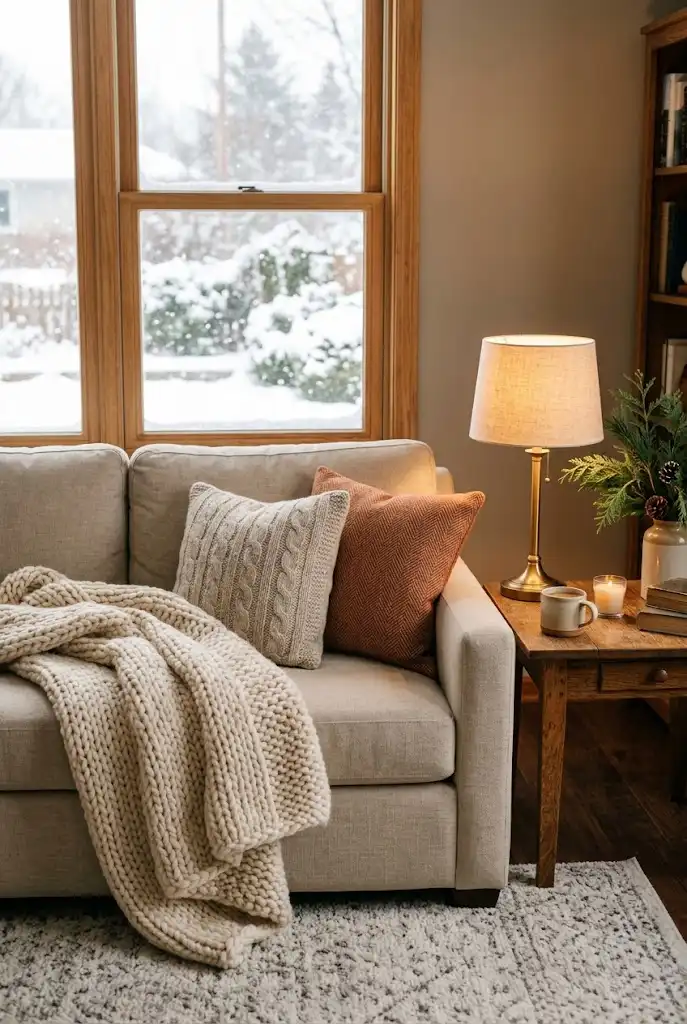
A chunky knit blanket instantly adds visual softness to a living room while making the sofa look ready for a chilly evening. Drape one casually over the arm or fold it across one corner of the cushions rather than arranging it too perfectly. Cream, oatmeal, taupe, warm gray, and muted brown work especially well with winter interiors. Pair the blanket with one or two smaller textured pillows for a layered look without overcrowding the seating area. If your sofa already has a strong pattern, choose a solid blanket with visible texture to keep the arrangement balanced.
Create a Warm Reading Corner
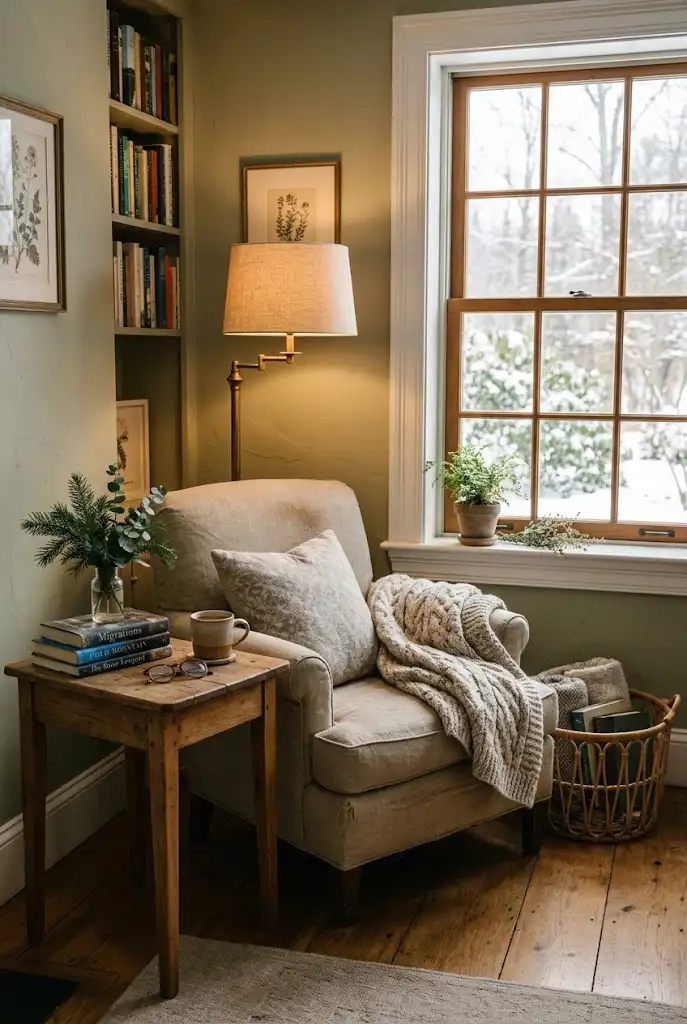
Turn an unused corner into a comfortable winter retreat with a cushioned armchair, small side table, soft throw, and warm lamp. A reading corner doesn’t require much space; even a compact chair beside a window can create a dedicated place to relax. Add a small basket nearby for blankets or books so the area remains organized. Choose warm wood or woven materials to soften the look, and position the lamp so the chair receives comfortable task lighting in the evening.
Add Warm White String Lights
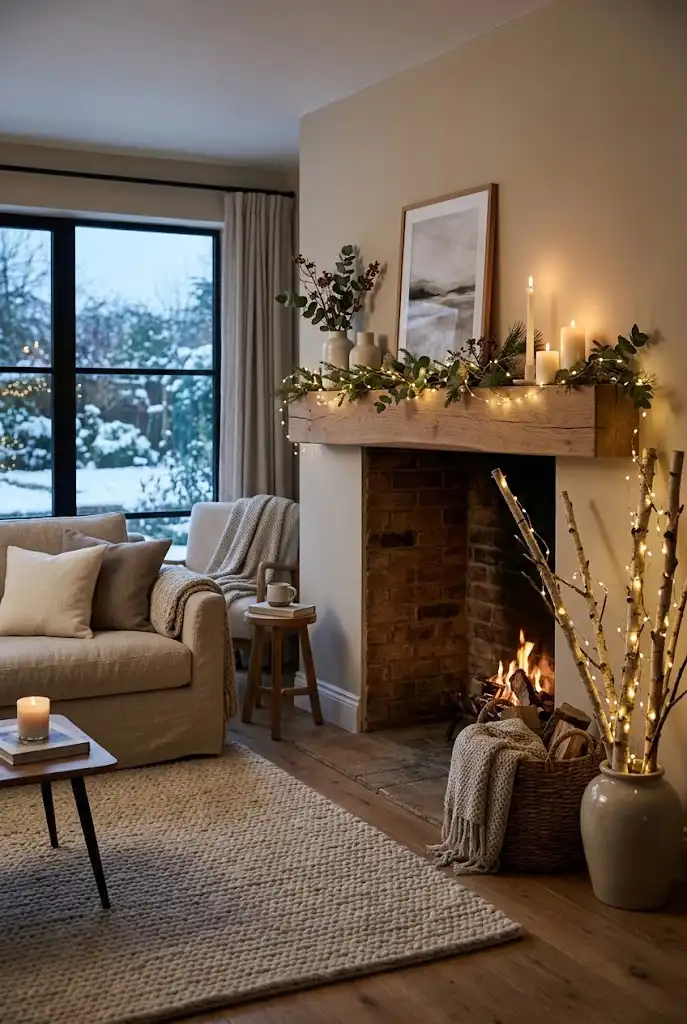
String lights can create a gentle winter glow without requiring permanent electrical changes. Use warm white lights around a mantel, bookshelf, window frame, or decorative branch arrangement. Keep the placement restrained so the lights feel like part of the room rather than holiday-only decorations. Warm white bulbs work particularly well with natural wood, cream textiles, and neutral walls. For renters, removable hooks can help create a temporary seasonal display without altering the walls.
Style the Mantel With Evergreen Branches
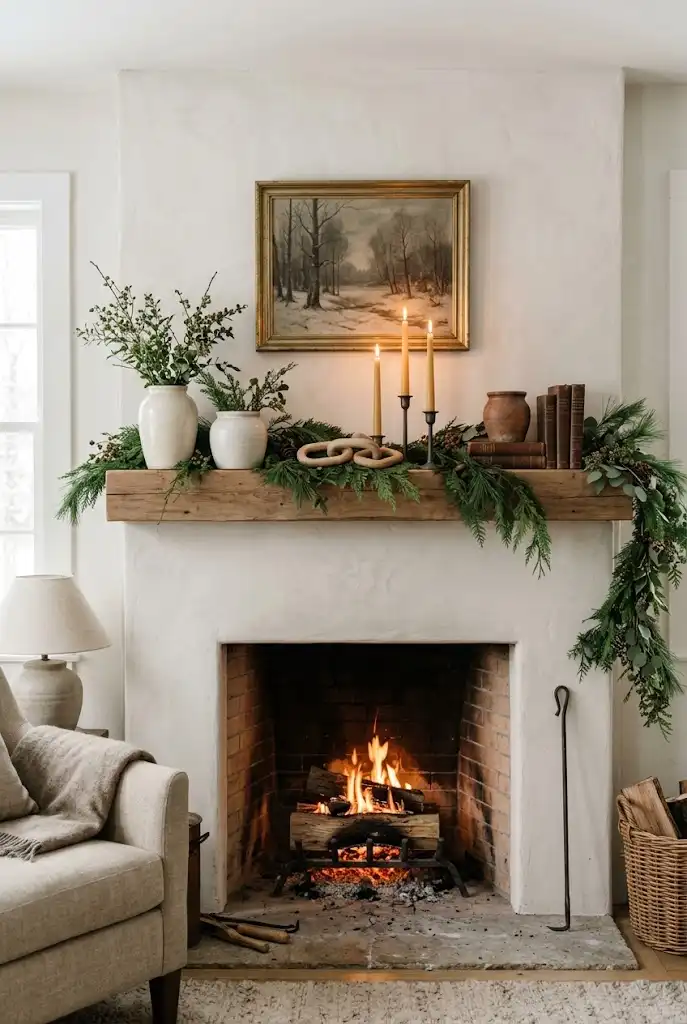
Evergreen branches bring a natural winter element indoors and work with both traditional and modern decorating styles. Arrange a loose garland across the mantel or use several branches in a large ceramic vase. Balance the greenery with candles, simple pottery, or a few wood accents instead of covering the entire surface. Fresh greenery can provide a natural seasonal look, while quality faux branches offer a reusable alternative.
Use Layered Neutral Textures
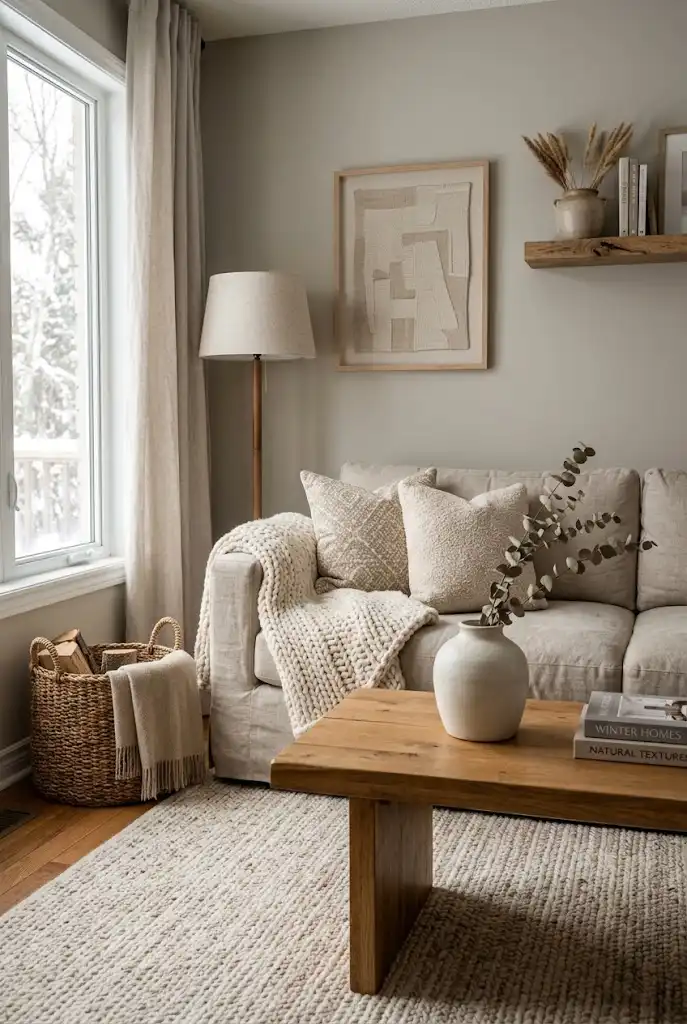
A room can feel warmer without becoming darker when you layer several neutral textures. Combine linen, wool, boucle, cotton, woven baskets, wood, and ceramic pieces in shades of cream, beige, tan, and warm gray. The different surfaces create visual depth even when the colors remain closely related. This approach works especially well for homes with modern or minimalist interiors where adding too many seasonal colors may feel distracting.
Bring in Rich Brown Wood Accents
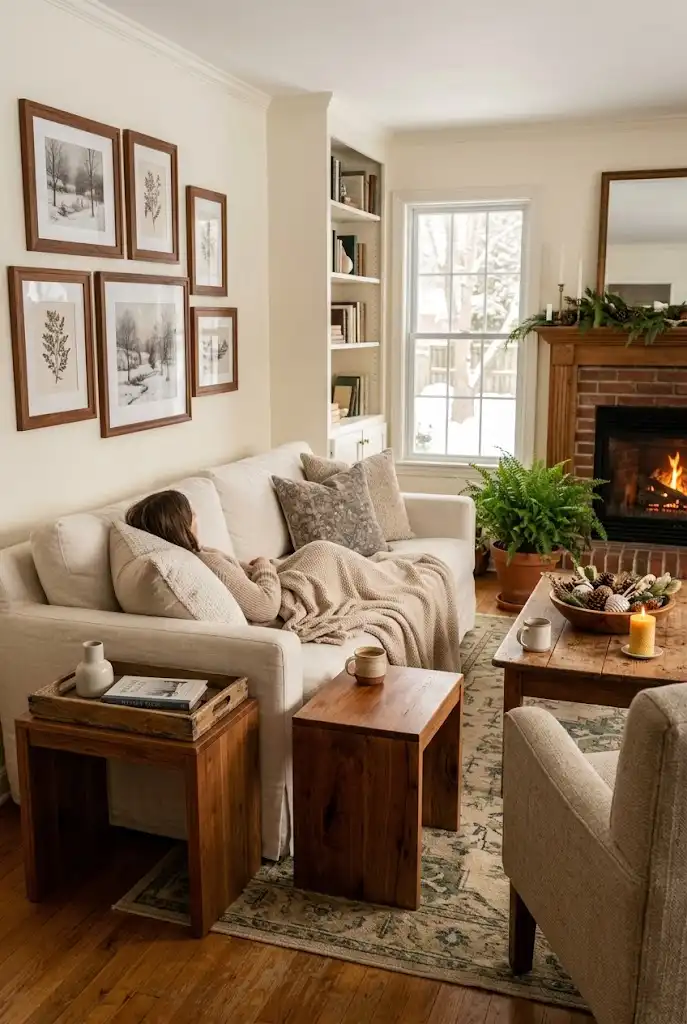
Brown wood introduces visual warmth and can make cool winter interiors feel more grounded. Try a wooden stool, side table, picture frame, tray, or decorative bowl rather than replacing major furniture. Medium and darker wood tones pair beautifully with cream upholstery and soft textiles. If your room already contains wood flooring or furniture, repeat the tone in smaller accessories to create a more connected look.
Add a Soft Area Rug Underfoot
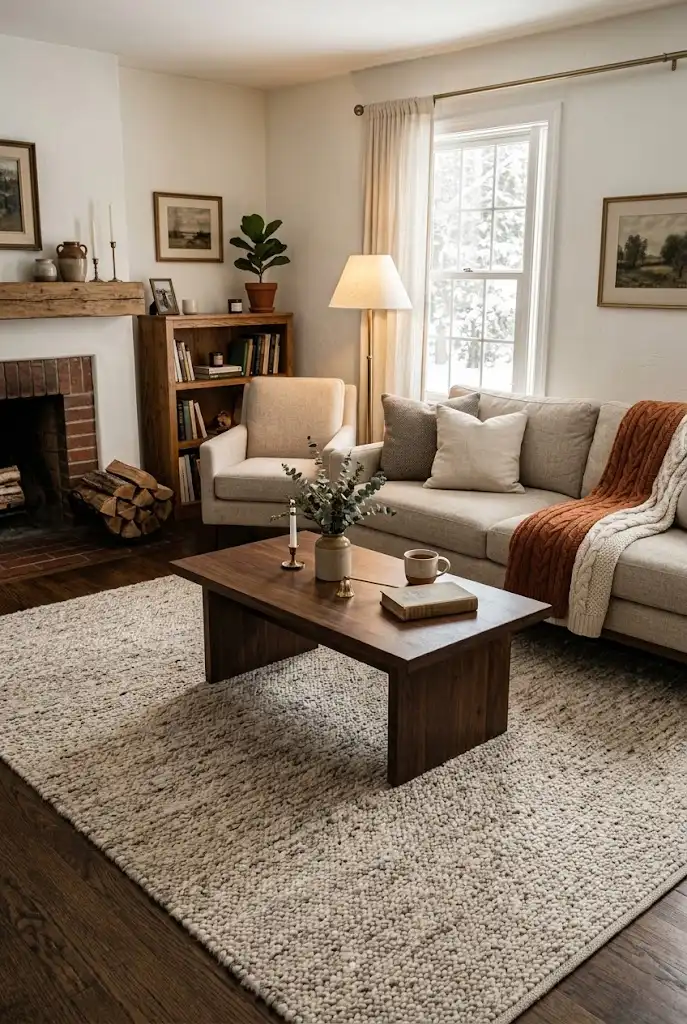
Cold floors can make a room feel less inviting, especially in living rooms and bedrooms. A plush area rug creates a softer visual and physical foundation for winter decorating. Choose a size large enough to connect the major furniture pieces rather than using a tiny rug that floats in the center of the room. Cream, oatmeal, muted patterns, and warm earthy colors are versatile choices that can transition into other seasons.
Decorate With Candlelight
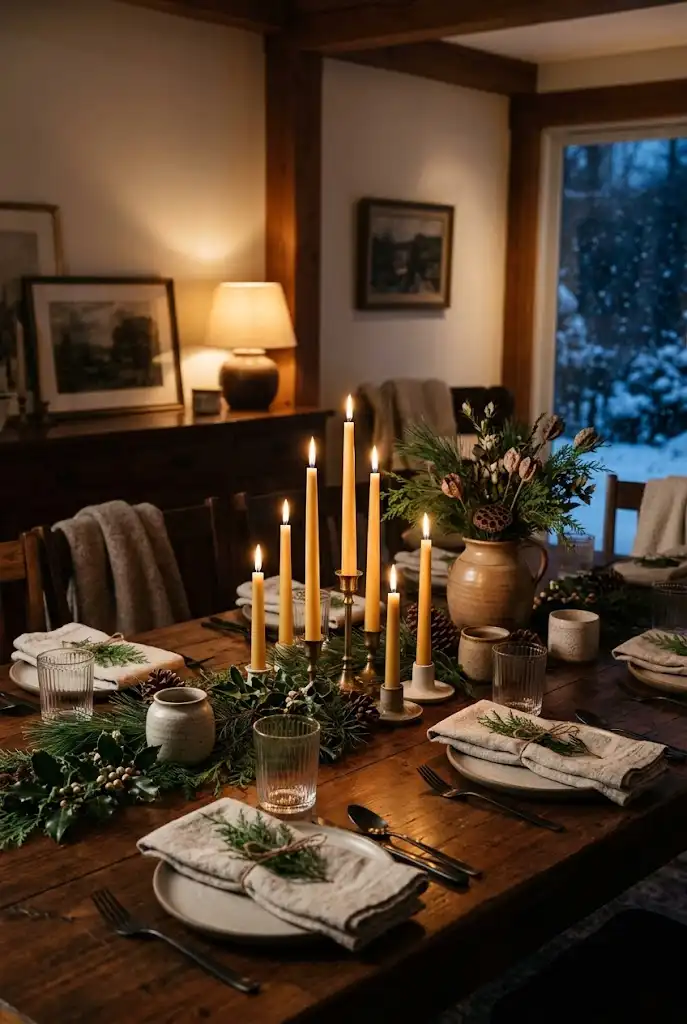
Candles add a warm point of light that works particularly well during dark winter evenings. Group several candles of different heights on a tray, mantel, dining table, or sideboard. Keep the arrangement simple and leave enough open space around the candles so the display doesn’t feel crowded. For households with children or pets, flameless candles can provide a similar visual effect while being easier to manage.
Layer the Bed With Cozy Bedding
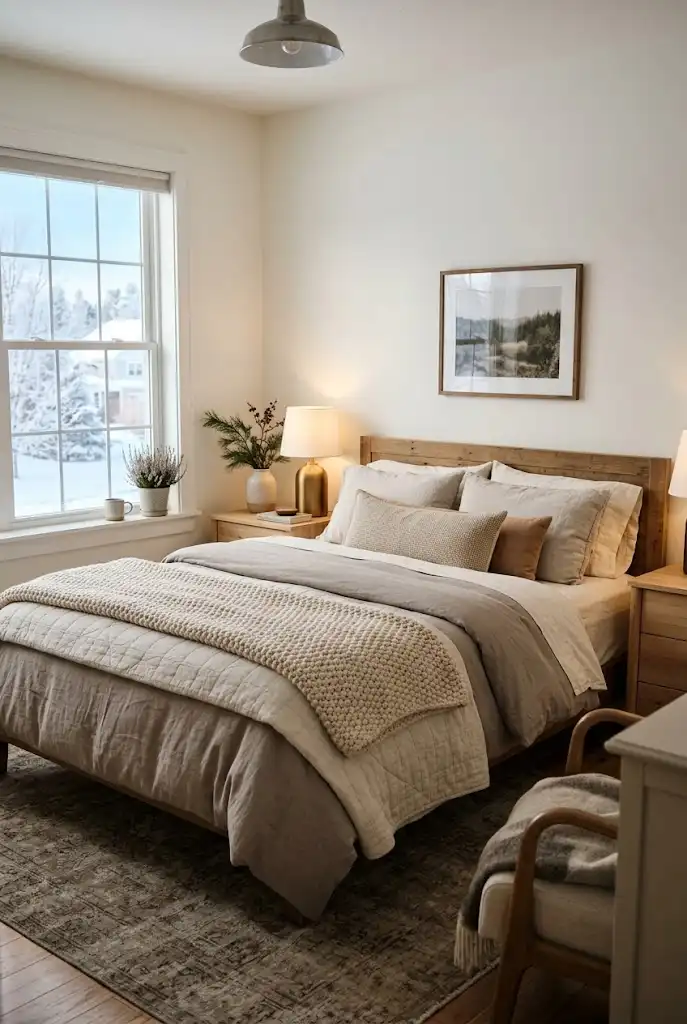
The bedroom is one of the easiest places to introduce winter comfort. Start with soft sheets, then add a quilt or coverlet, a thicker duvet, and a textured throw at the foot of the bed. Keep the color palette coordinated rather than using too many unrelated patterns. A few larger pillows can make the bed look inviting while still leaving enough room for practical use.
Add Woven Baskets for Warmth and Storage
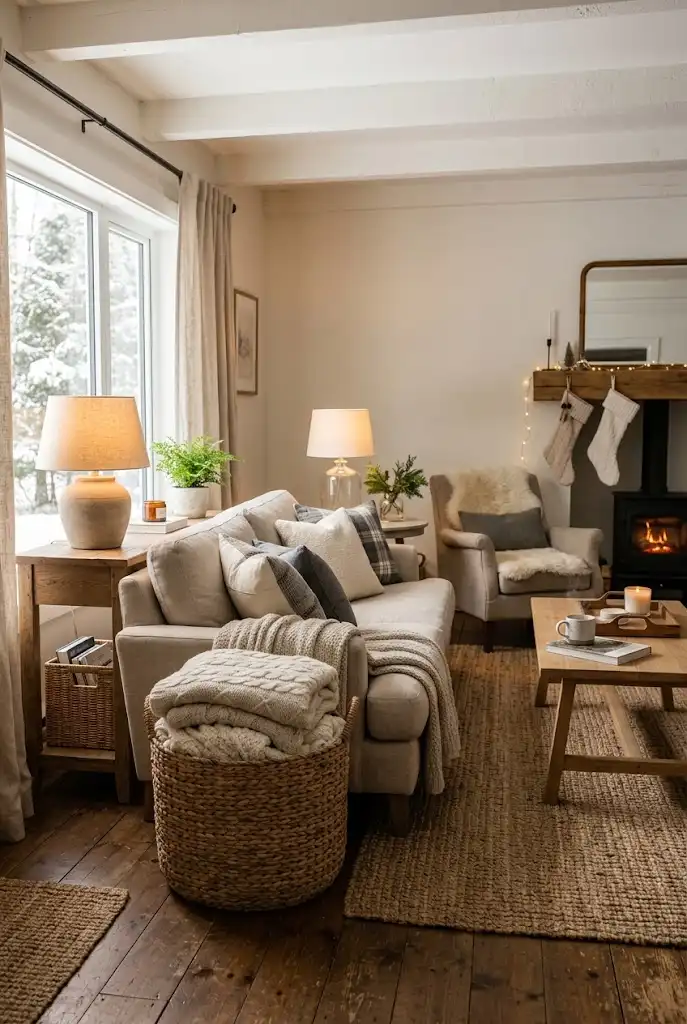
Woven baskets are useful because they combine organization with natural texture. Place a large basket beside the sofa for blankets, a smaller one under a console, or several baskets on open shelving. Natural seagrass, rattan, cane, and similar woven materials complement wood furniture and neutral textiles. Keeping practical items inside attractive baskets can also help a winter room feel more orderly.
Create a Winter-Inspired Entryway
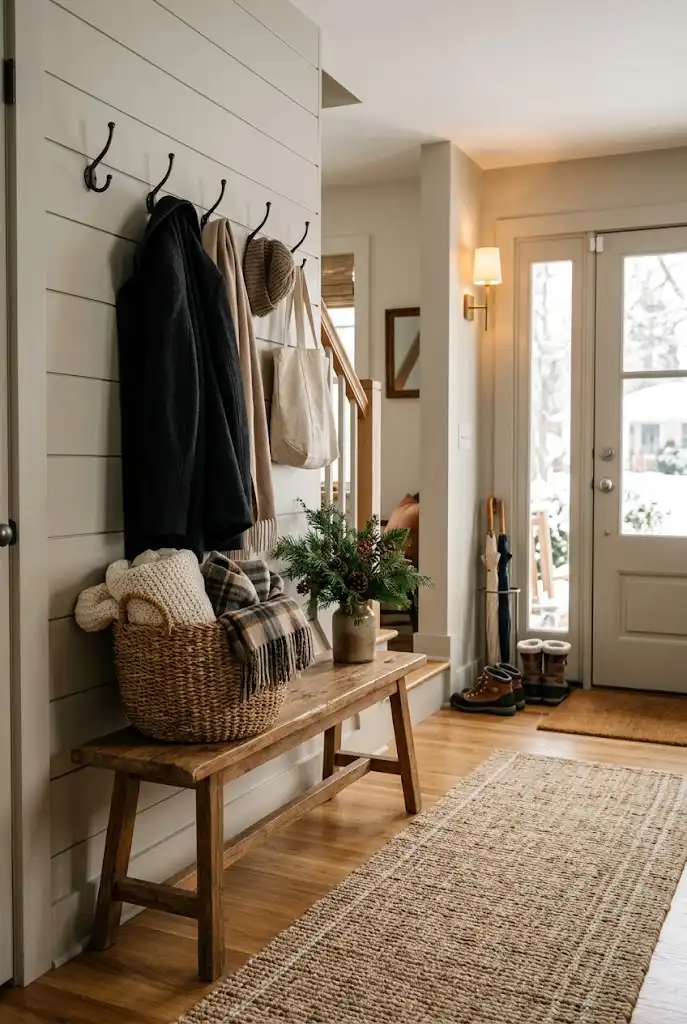
Give your entryway a seasonal refresh with a textured runner, wood accents, a basket for winter accessories, and a few evergreen branches. A bench can make the area more functional while also providing a place for shoes and bags. Keep pathways clear because entryways need to handle daily traffic. The goal is to make the first few steps into your home feel warm without sacrificing practicality.
Use Warm-Toned Lampshades
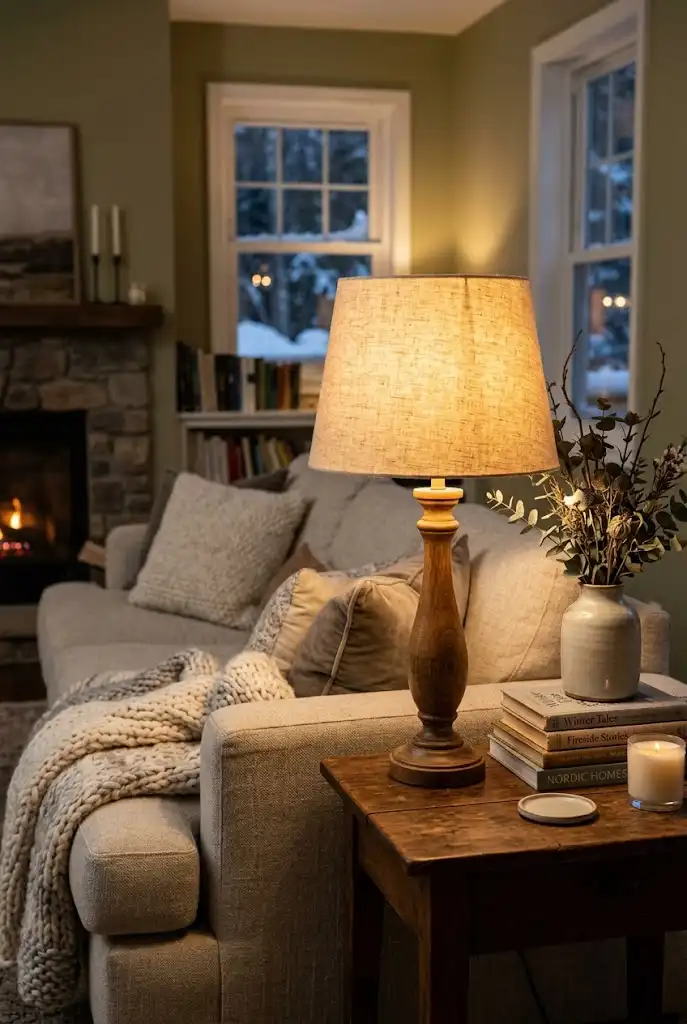
Changing a lampshade can subtly alter the atmosphere of a room without replacing the entire light fixture. Linen, parchment, cream, and warm beige shades diffuse light softly and create a gentler evening glow. Use them on table lamps, floor lamps, or bedroom lighting. Pairing warm lampshades with bulbs that produce comfortable warm light can make the room feel especially inviting after sunset.
Style a Coffee Table With Natural Elements
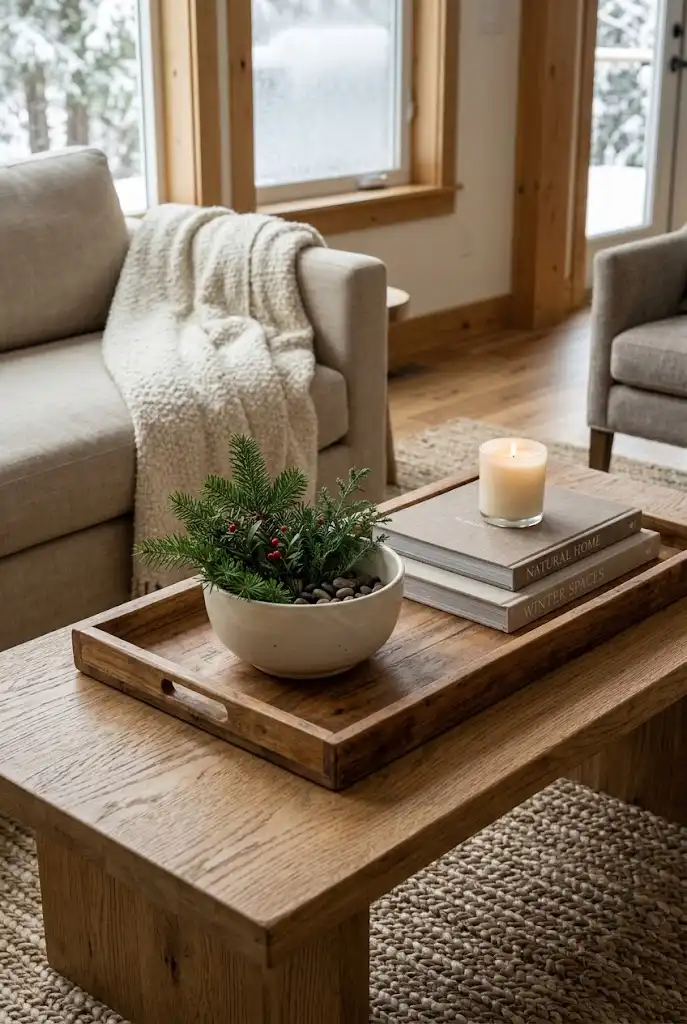
A winter coffee table doesn’t need to be filled with seasonal ornaments. Instead, combine a wooden tray, ceramic bowl, candle, small stack of books, and a few evergreen clippings. Keep the tallest item toward one side and leave enough open surface for everyday use. Natural materials help the arrangement feel seasonal without looking overly themed.
Introduce Deep Winter Accent Colors
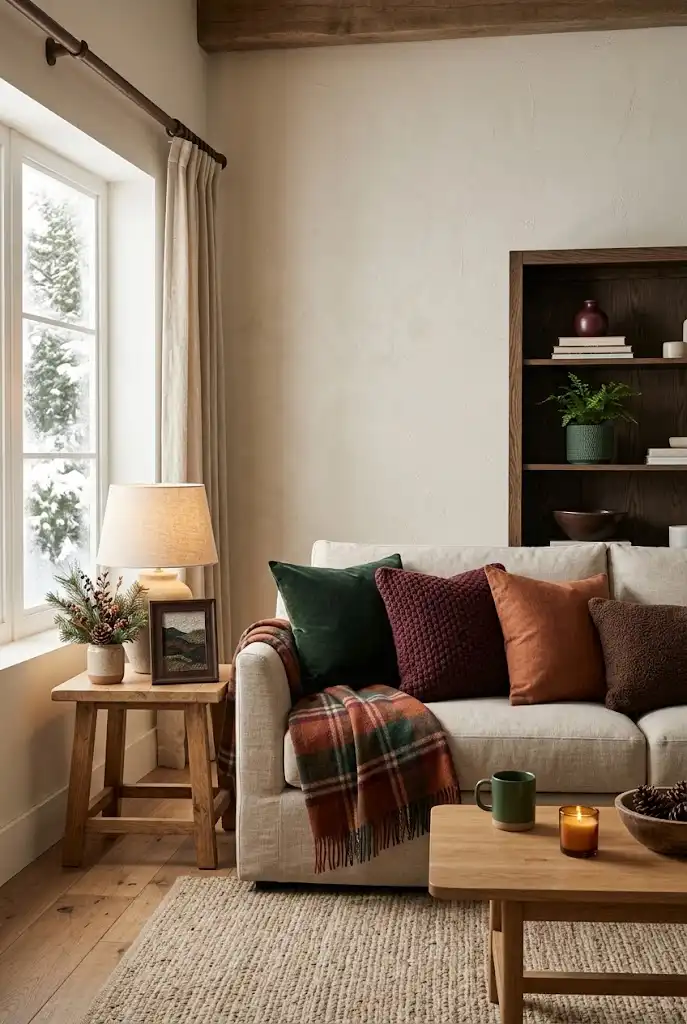
A mostly neutral room can feel richer with a few deeper winter accents. Try forest green, burgundy, rust, navy, chocolate brown, or muted charcoal through pillows, blankets, artwork, or small accessories. You don’t need to repaint the room or replace large furniture. A few carefully repeated accents can give a familiar space more seasonal depth.
Hang a Textured Winter Wreath
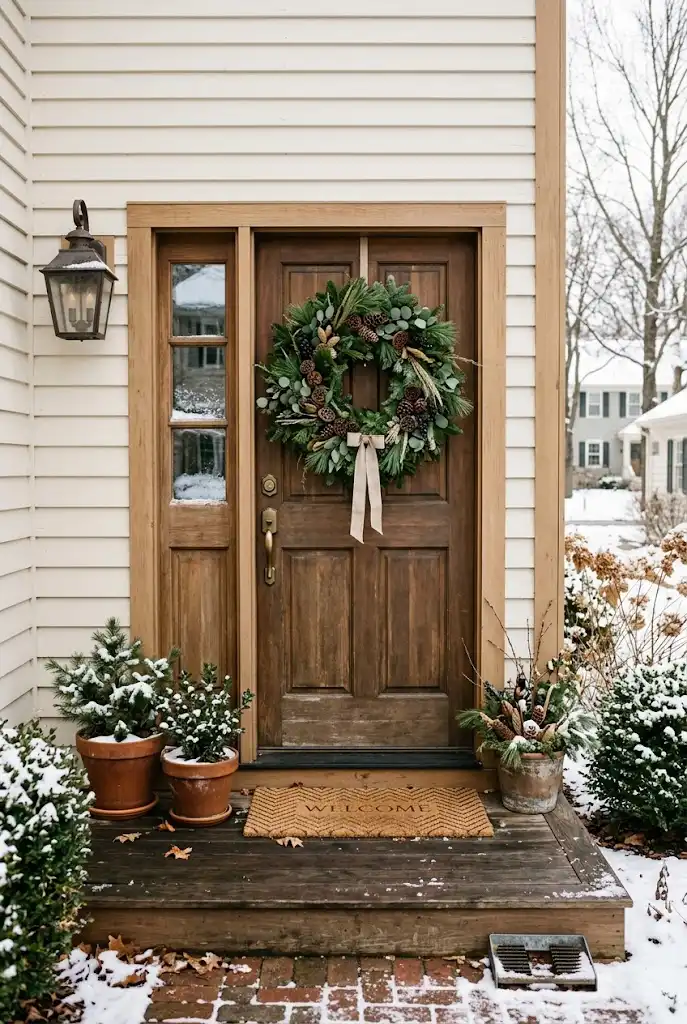
A winter wreath can add seasonal character to an exterior door, interior wall, mirror, or cabinet. For a more versatile look, choose a design based on evergreen branches, eucalyptus, dried grasses, pinecones, or simple natural materials instead of heavily themed ornaments. A restrained wreath can remain attractive throughout much of the winter season.
Add Sheer Curtains for Soft Winter Light
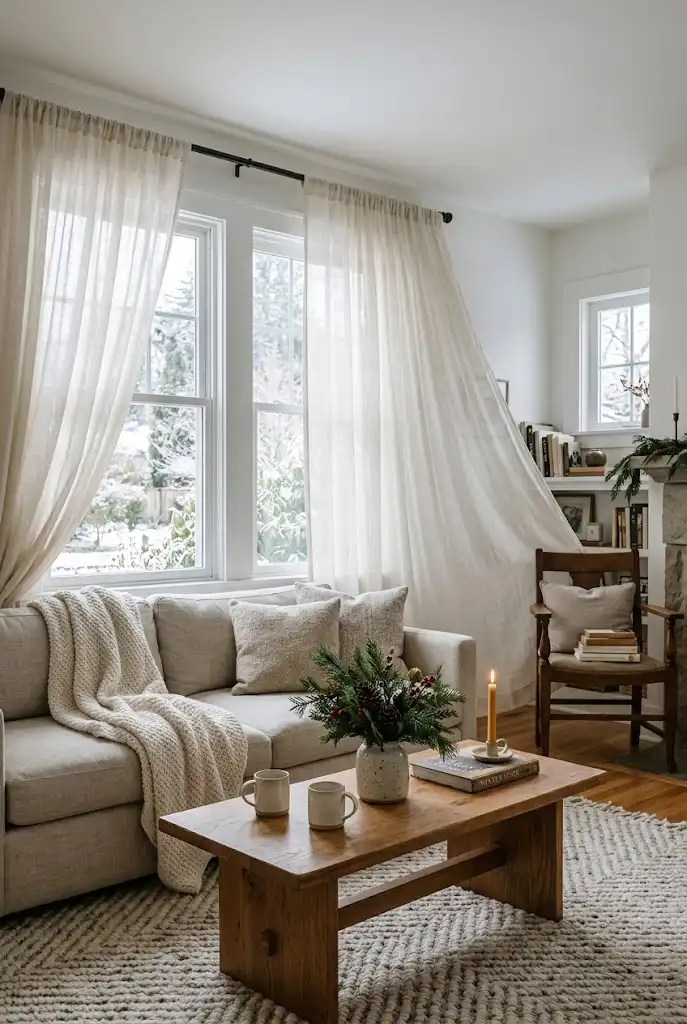
Heavy winter curtains aren’t the only way to make a room feel cozy. Sheer or lightly textured curtains can soften bright daylight while keeping the room visually airy. Layer them with heavier panels if you want more privacy or nighttime insulation. Neutral fabrics such as ivory, oatmeal, or soft beige blend easily with winter decor and allow natural light to remain part of the room.
Build a Cozy Fireplace Focal Point
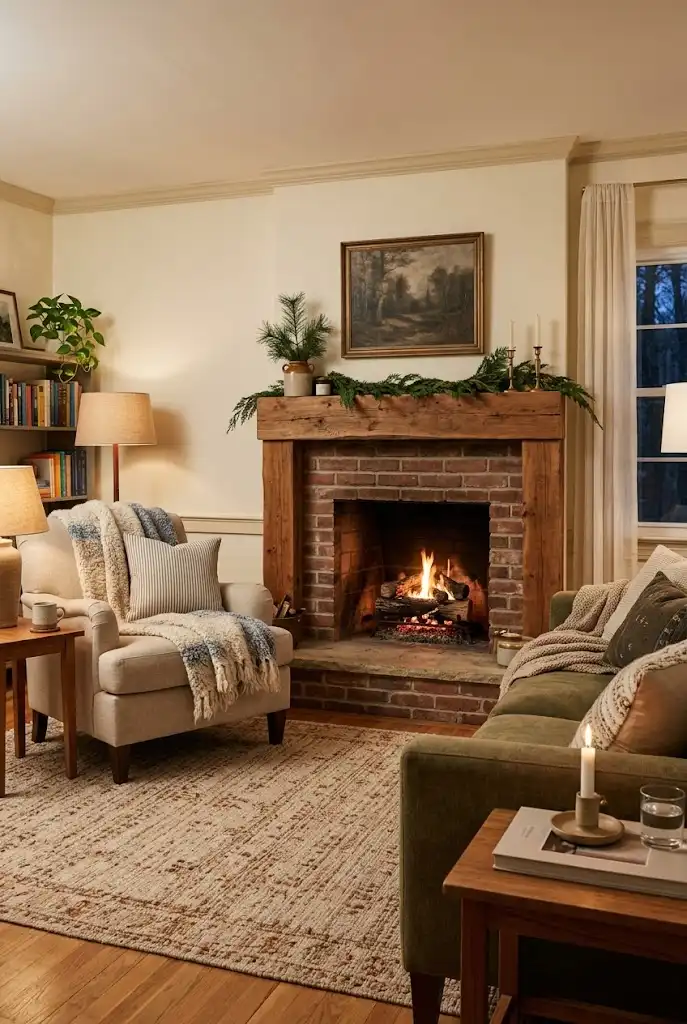
If your home has a fireplace, make it the visual center of the room during winter. Arrange comfortable seating so the fireplace remains visible without blocking traffic. Add a simple mantel arrangement, a soft rug, and warm lighting to reinforce the focal point. Even a non-working fireplace can create a cozy effect with candles, stacked logs, or carefully arranged decorative objects.
Decorate With Dried Winter Botanicals
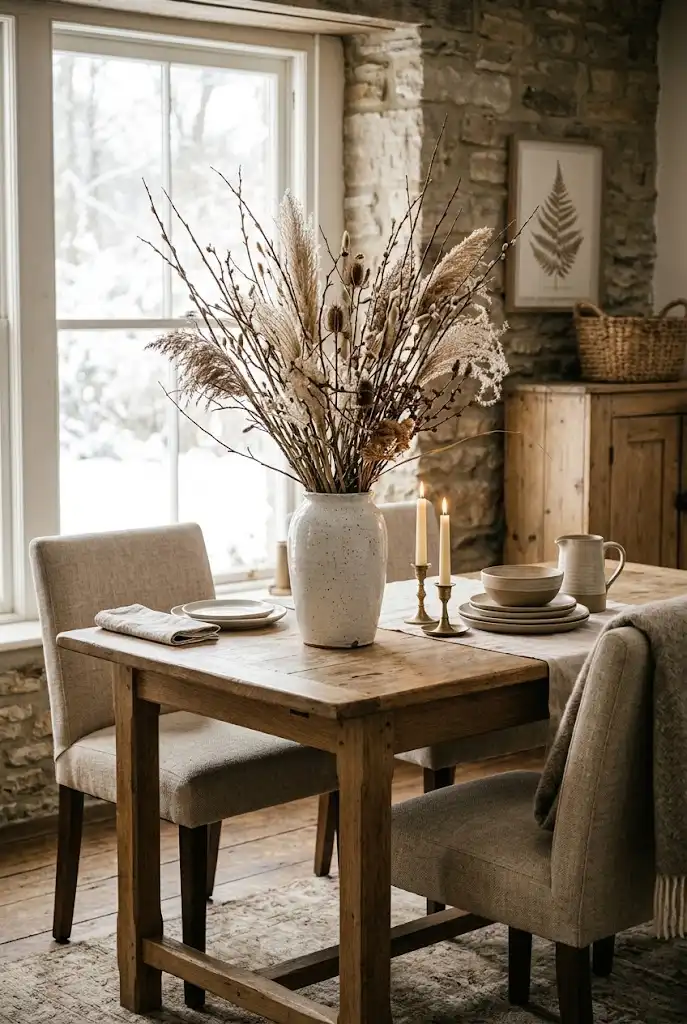
Dried branches and grasses can bring seasonal texture to rooms where fresh greenery isn’t practical. Place tall dried stems in a large ceramic vase or use smaller arrangements on a console or dining table. Their muted colors work well with warm neutrals and natural wood. Keep the arrangement loose and slightly asymmetrical for a relaxed editorial feel.
Make a Small Kitchen Cozy With Textiles
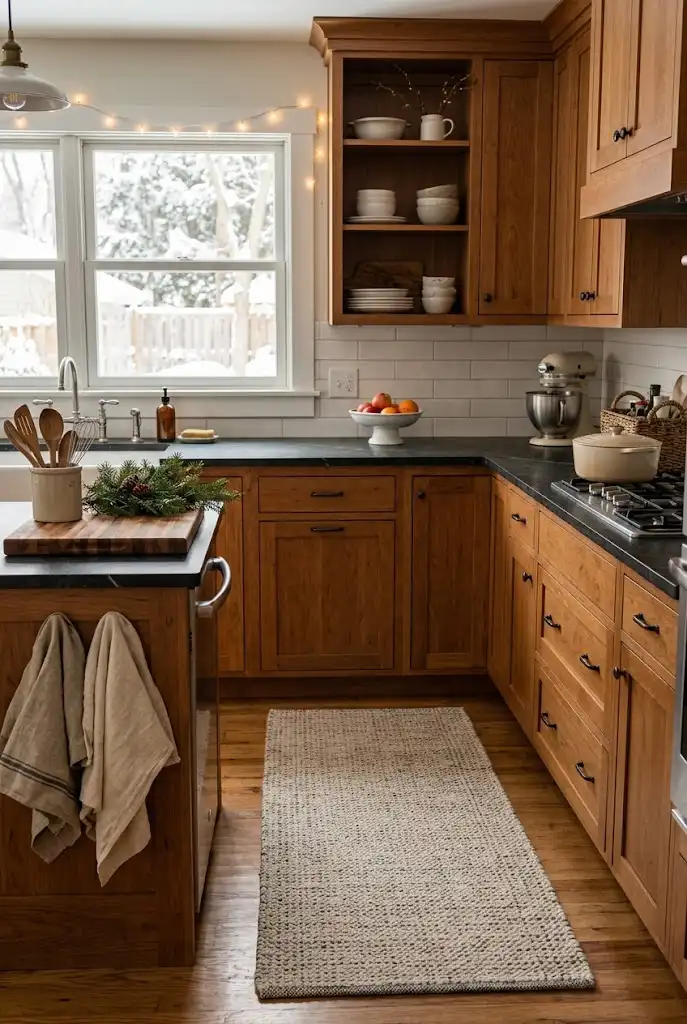
Kitchens can feel cold because of hard surfaces such as tile, stone, metal, and cabinetry. Introduce softness with a washable runner, linen towels, woven baskets, a small wood cutting board, and a few seasonal branches. Keep countertops functional and avoid covering useful work areas. Small additions can make the kitchen feel warmer without interfering with everyday cooking.
Create a Warm Dining Table Setting

A winter dining table can feel special without becoming overly formal. Start with a neutral runner or bare wood table, then add natural greenery, candles, ceramic dishes, linen napkins, and simple wood or woven accents. Keep the center low enough that people can see across the table comfortably. A restrained palette of cream, green, brown, and soft gray creates a relaxed seasonal setting.
Finish the Room With a Cozy Scent Station
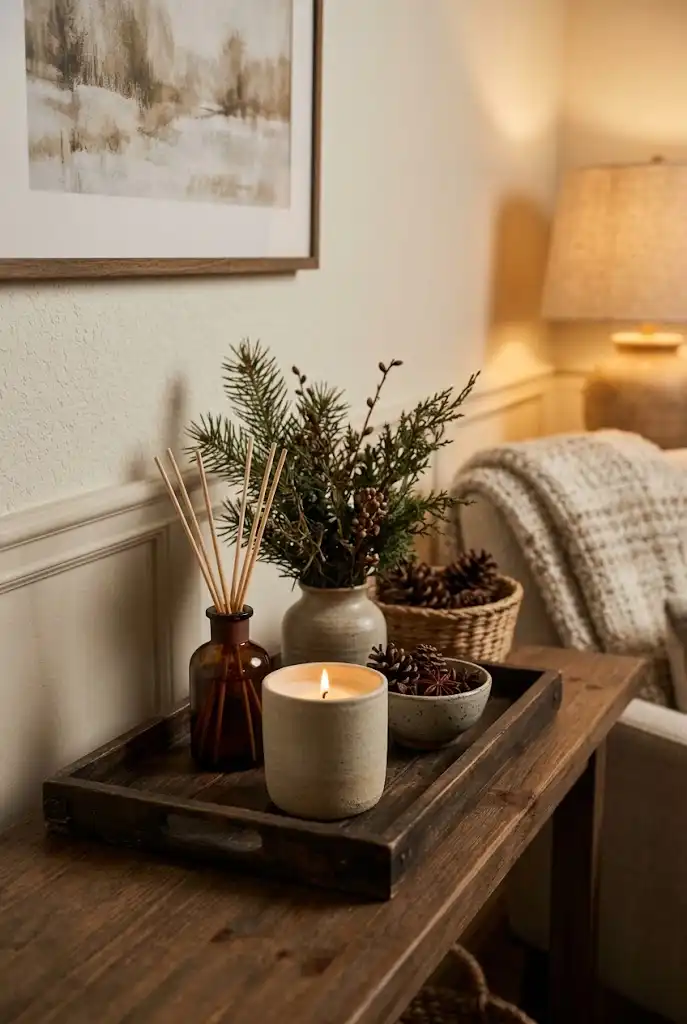
Scent can contribute to the overall seasonal atmosphere, especially in living areas, bedrooms, and entryways. Create a small styling moment with a candle, diffuser, dried botanicals, or another home fragrance option arranged on a tray. Warm seasonal scent profiles such as cedar, vanilla, cinnamon, amber, or evergreen can complement the visual mood of winter. Keep the display contained and away from high-traffic areas so it remains both attractive and practical.