

18 Cozy Bedroom Ideas for a Comfortable and Stylish Home
A cozy bedroom should feel comfortable the moment you walk through the door. The right combination of soft bedding, warm lighting, inviting textures, and thoughtful furniture placement can make even a simple bedroom feel more relaxing. You don’t need a large space or an unlimited decorating budget to create that atmosphere. Small changes, such as adding layered textiles, choosing warmer colors, or creating a gentle lighting scheme, can make a noticeable difference. These cozy bedroom ideas cover a range of styles, from simple apartment-friendly updates to more polished bedroom designs. Whether you’re refreshing a guest room, primary bedroom, or compact sleeping space, the goal is to create a room that feels personal, calm, and easy to live in.
Layer the Bed With Soft Neutral Bedding
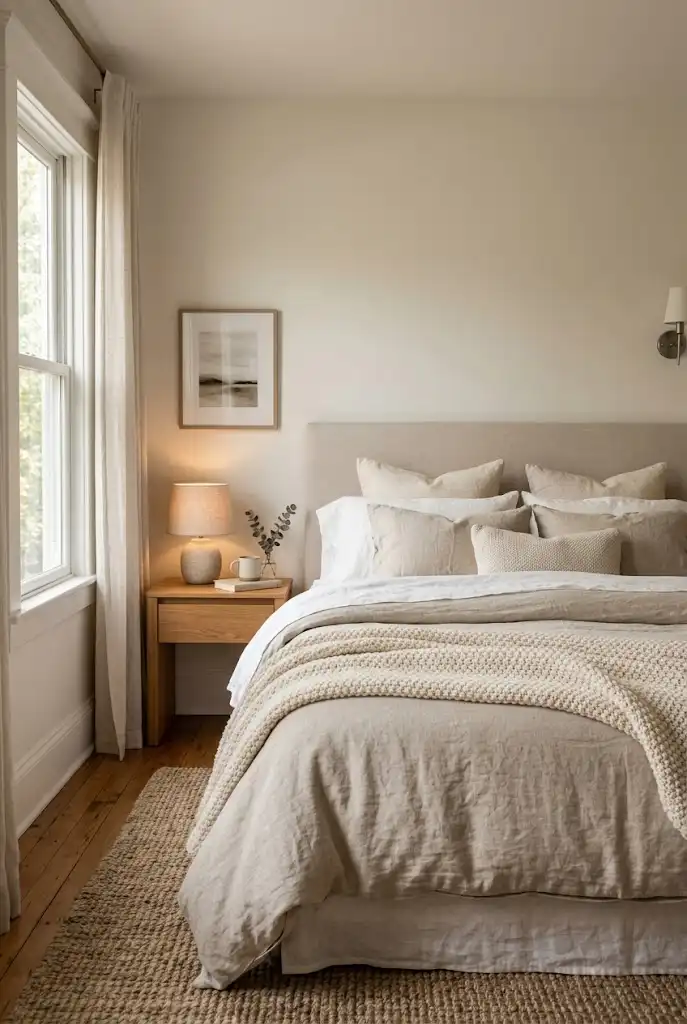
A layered bed instantly gives a bedroom a more inviting appearance. Start with crisp cotton or linen sheets, then add a textured duvet, a folded blanket, and several pillows in complementary neutral shades. Cream, warm white, oatmeal, taupe, and soft beige create a relaxed foundation without making the room feel flat. Add different textures rather than relying on several similar fabrics so the bed has visual depth. A chunky knit throw at the foot of the bed can provide another tactile element during cooler months. Keep the palette restrained so the room remains restful rather than busy. This approach also works well in rentals because bedding can completely change the feeling of a room without permanent alterations.
Add Warm Wood for Natural Comfort
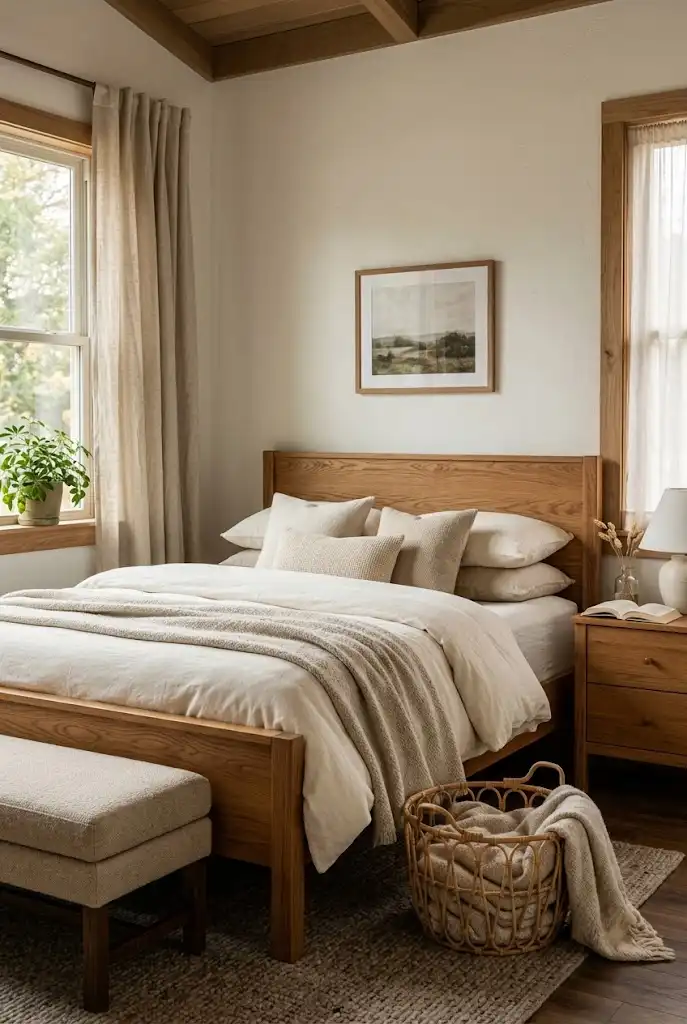
Wood brings visual warmth to a bedroom and pairs especially well with soft fabrics. A walnut nightstand, oak bed frame, wood bench, or small wooden accent table can make a cool-toned room feel more grounded. You don’t need matching wood throughout the room; slightly varied tones can create a collected appearance. Pair natural wood with cream bedding and woven accessories for a relaxed look. If the bedroom already has wood flooring, repeat that material through smaller furniture pieces rather than introducing too many competing finishes. For renters, a wooden bedside table or freestanding bench is an easy way to introduce warmth without changing the room’s permanent features.
Create a Soft Layered Lighting Scheme
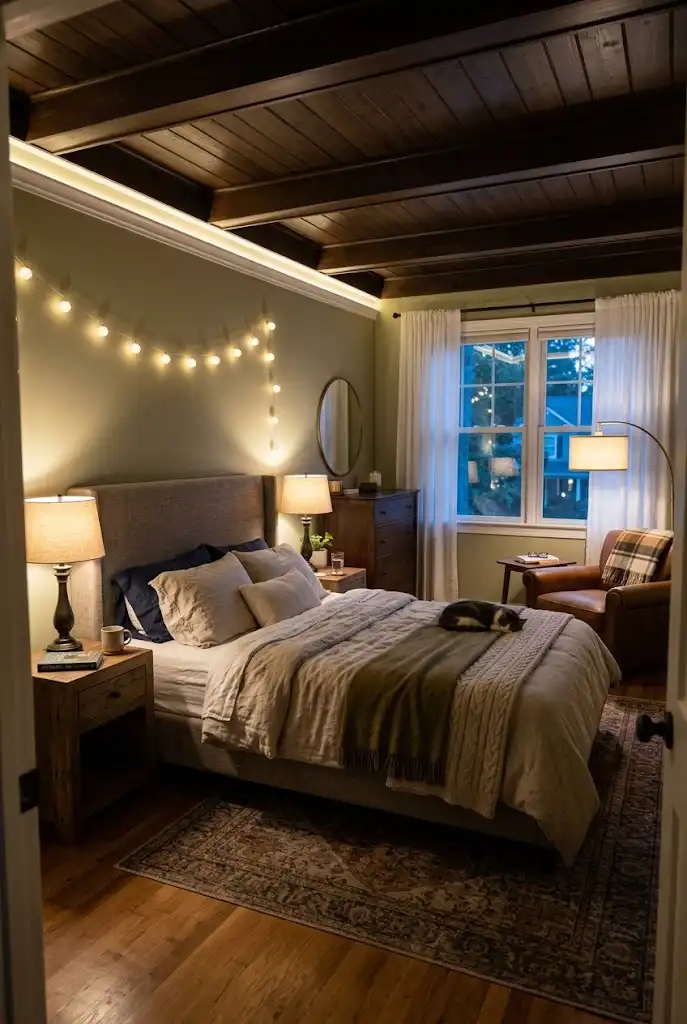
A cozy bedroom rarely depends on one bright ceiling fixture. Instead, combine several light sources at different heights. Bedside lamps provide practical reading light, while a floor lamp can illuminate a darker corner. A small accent lamp on a dresser adds another warm point of light. Choose bulbs with a warm residential glow and use shades that soften the light rather than exposing a harsh bare bulb. If the room has strong daylight during the afternoon, sheer curtains can diffuse it while maintaining brightness. Layered lighting makes the bedroom adaptable, allowing you to create a brighter atmosphere when needed and a calmer one in the evening.
Use an Upholstered Headboard
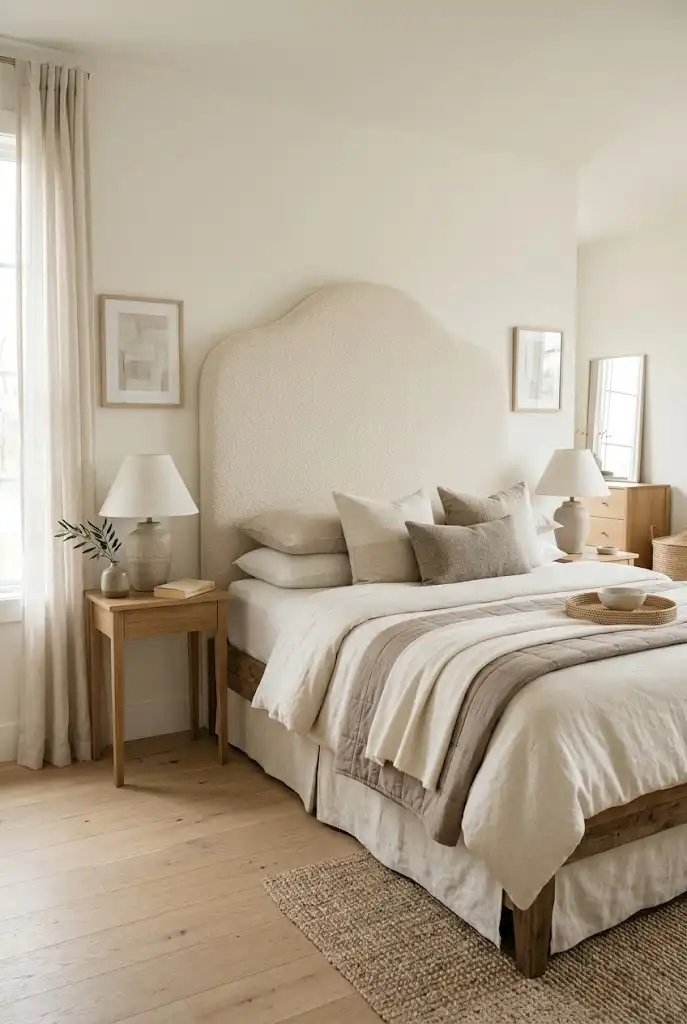
An upholstered headboard can make the bed feel softer and more substantial without requiring elaborate decoration. Choose linen, cotton, boucle, or another durable upholstery in a calm shade that complements the bedding. A simple rectangular shape suits many bedroom styles, while a gently curved headboard can introduce a softer silhouette. Keep the surrounding furniture relatively simple so the headboard remains the visual anchor. In a small bedroom, a light-colored upholstered headboard can add comfort without visually overwhelming the wall. Pair it with warm bedside lighting and tactile bedding for a cohesive look.
Bring in a Plush Area Rug
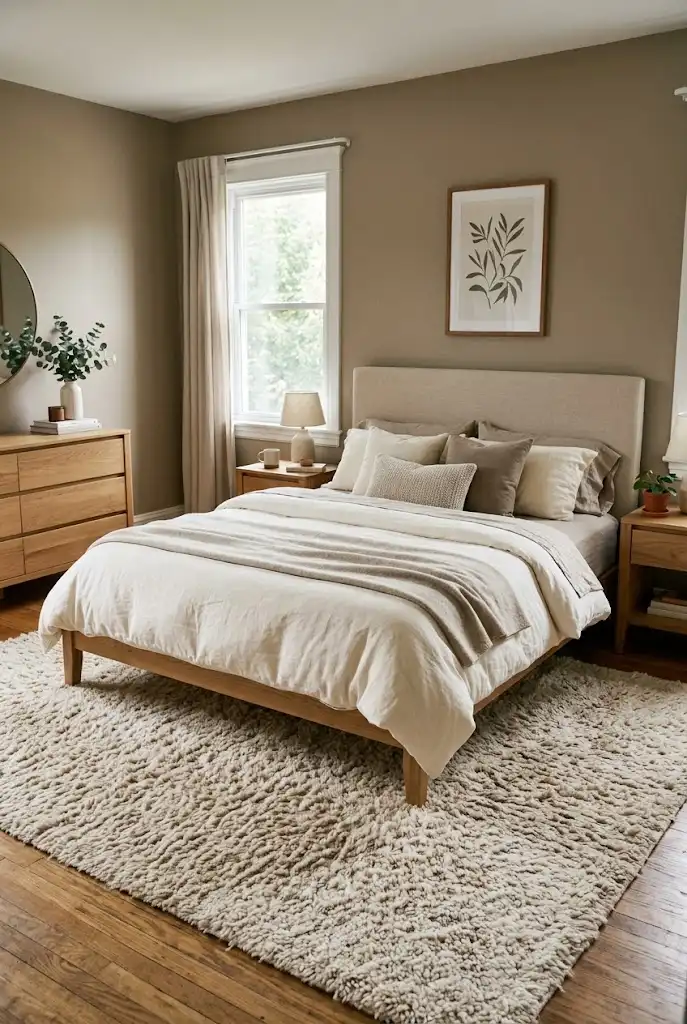
A soft area rug can make a bedroom feel warmer both visually and underfoot. Place a large rug beneath the bed so that it extends beyond the sides and creates a defined sleeping zone. In smaller rooms, runners or smaller rugs beside the bed can provide a similar tactile effect. Choose a low-contrast pattern if the bedding already contains texture, or use a subtle pattern to introduce interest into an otherwise simple room. Cream, sand, muted gray, and warm brown are versatile choices, but a deeper color can also work when balanced with lighter bedding. Make sure the rug’s scale suits the room instead of choosing a piece that feels too small.
Choose Warm, Earthy Wall Colors
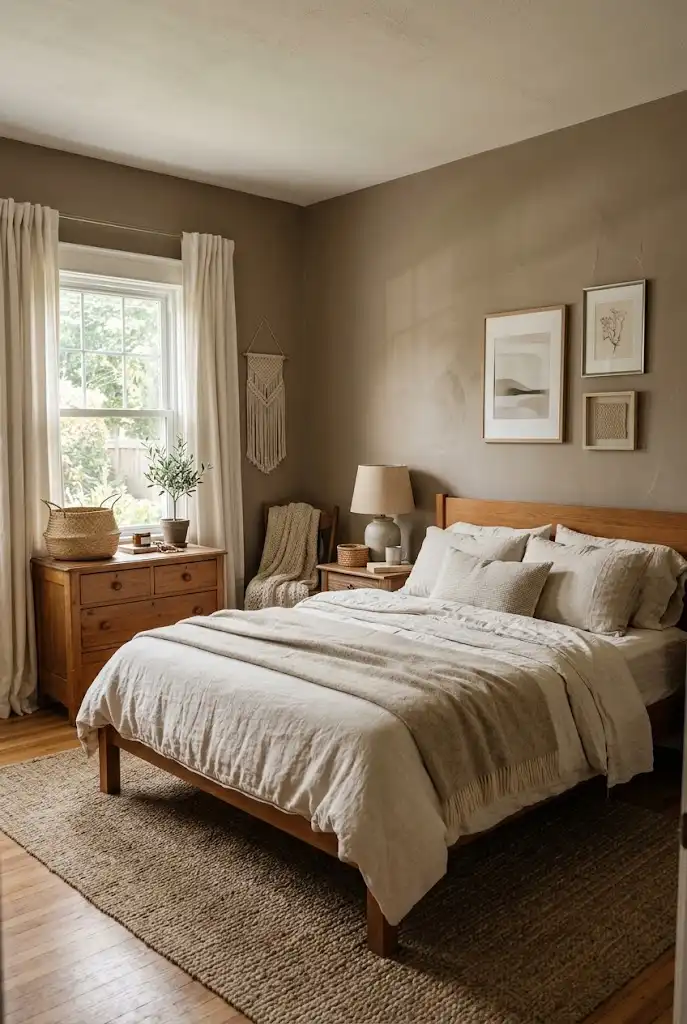
Wall color has a major influence on the mood of a bedroom. Warm beige, muted clay, soft taupe, creamy white, dusty olive, and other earthy tones can create a grounded backdrop for cozy furnishings. The best shade depends on natural light, flooring, and the colors already present in the room. Test paint samples at different times of day before committing because daylight can significantly change how a color appears. If painting the entire room feels like too much work, use the color on one accent wall behind the bed. Keep the remaining furnishings coordinated without matching every shade exactly.
Make a Reading Corner
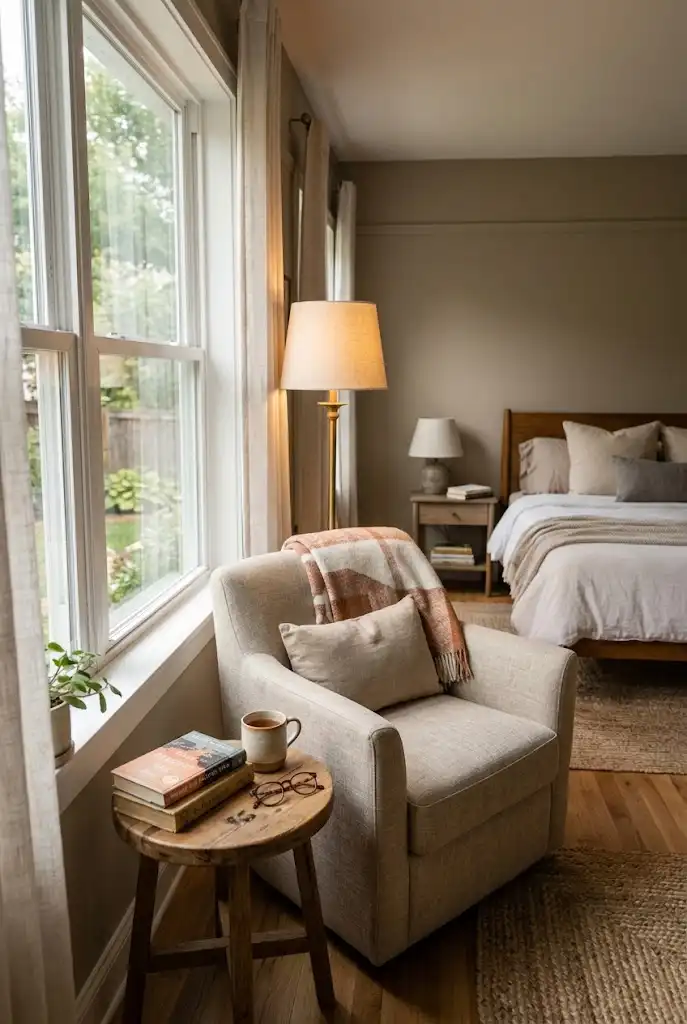
A bedroom becomes more functional and inviting when it includes a small place to sit besides the bed. In a larger room, place a comfortable armchair near a window with a small side table and floor lamp. In a compact bedroom, a narrow upholstered chair or simple bench may be enough. Keep the palette connected to the rest of the room so the corner feels intentional rather than added afterward. A small basket for blankets can provide useful storage nearby. This arrangement creates a quiet spot for reading, getting dressed, or simply enjoying a few minutes away from the bed.
Hang Soft Floor-Length Curtains
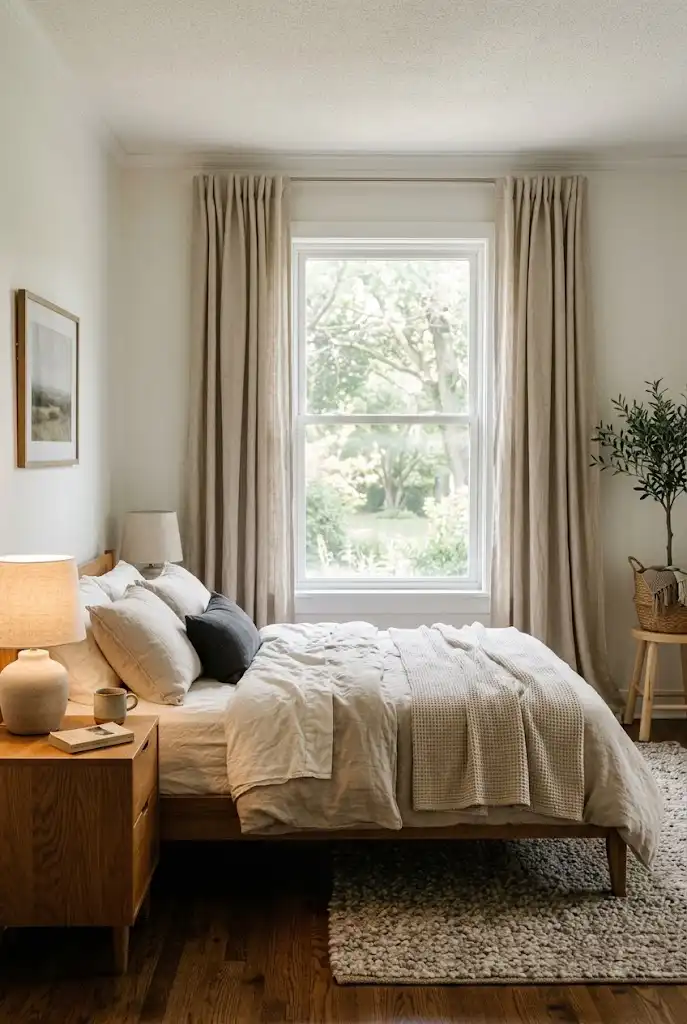
Window treatments can make a bedroom feel finished while also influencing how light enters the room. Floor-length curtains in linen or another softly textured fabric add vertical softness and help frame the window. Hanging the rod slightly above the window frame can emphasize the room’s height when the architecture allows it. Choose a color that relates to the walls or bedding rather than introducing a completely unrelated shade. Sheer panels can filter daylight, while lined curtains provide a more substantial appearance. Keep the fabric relaxed rather than overly stiff for a bedroom that feels comfortable rather than formal.
Add a Small Gallery Wall Above the Bed
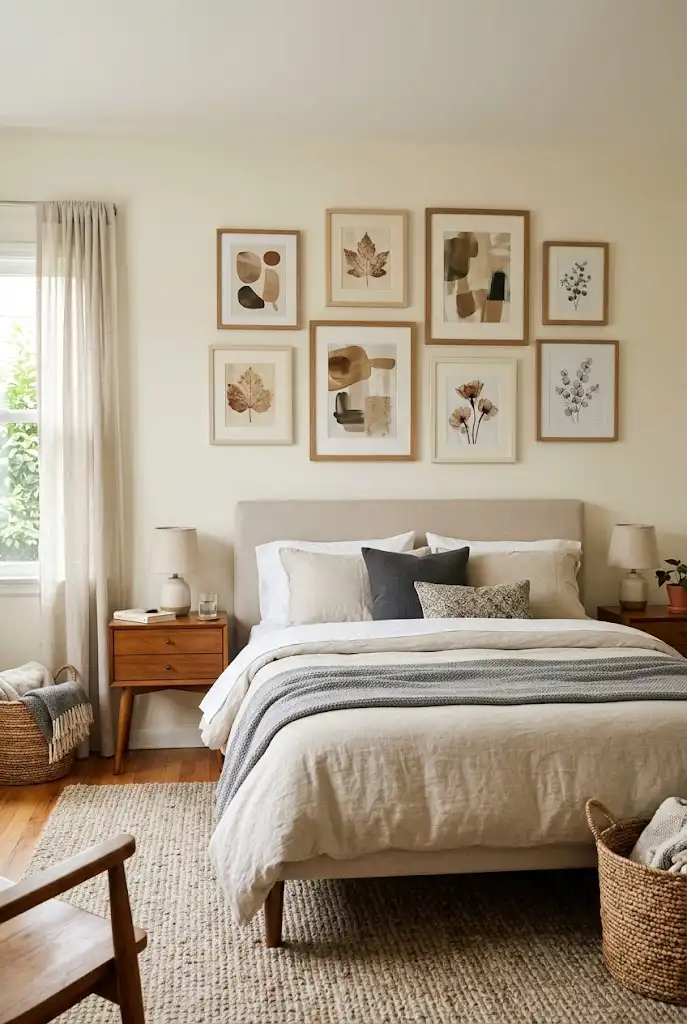
Artwork can personalize a bedroom without requiring major renovations. A small gallery wall above the bed works particularly well when the pieces share a loose visual relationship rather than being identical. Consider botanical prints, abstract artwork, line drawings, or understated photography in complementary frames. Leave enough breathing room between the artwork and headboard so the wall does not feel crowded. For a rental, lightweight frames or removable hanging solutions can provide a similar effect where permitted. Keep the artwork relatively calm in color so it supports the bedroom’s restful atmosphere.
Style the Nightstand With Intention
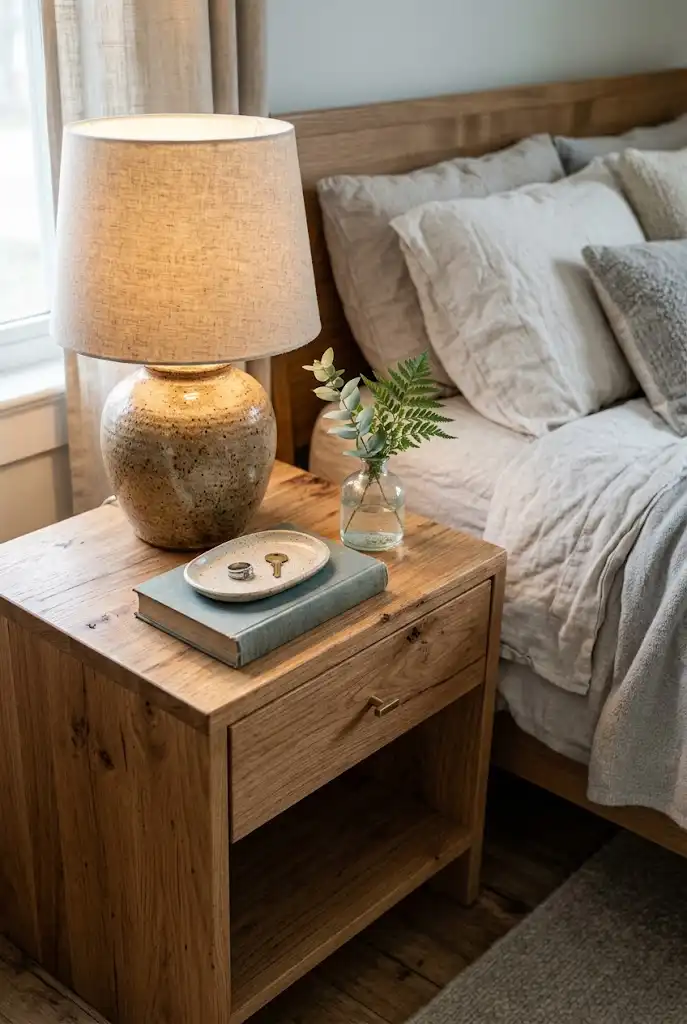
A cluttered nightstand can work against the calm feeling you’re trying to create. Keep the surface useful but restrained with a lamp, a small dish, one book, and perhaps a vase or small plant. Choose objects with different heights to create visual balance without filling every inch. A drawer or lower shelf can hold less attractive necessities such as chargers and personal items. If you have two nightstands, they don’t need to be perfectly identical, but repeating one or two elements can help the room feel coordinated. The goal is a surface that feels personal while remaining easy to clear at bedtime.
Mix Knit and Woven Textures
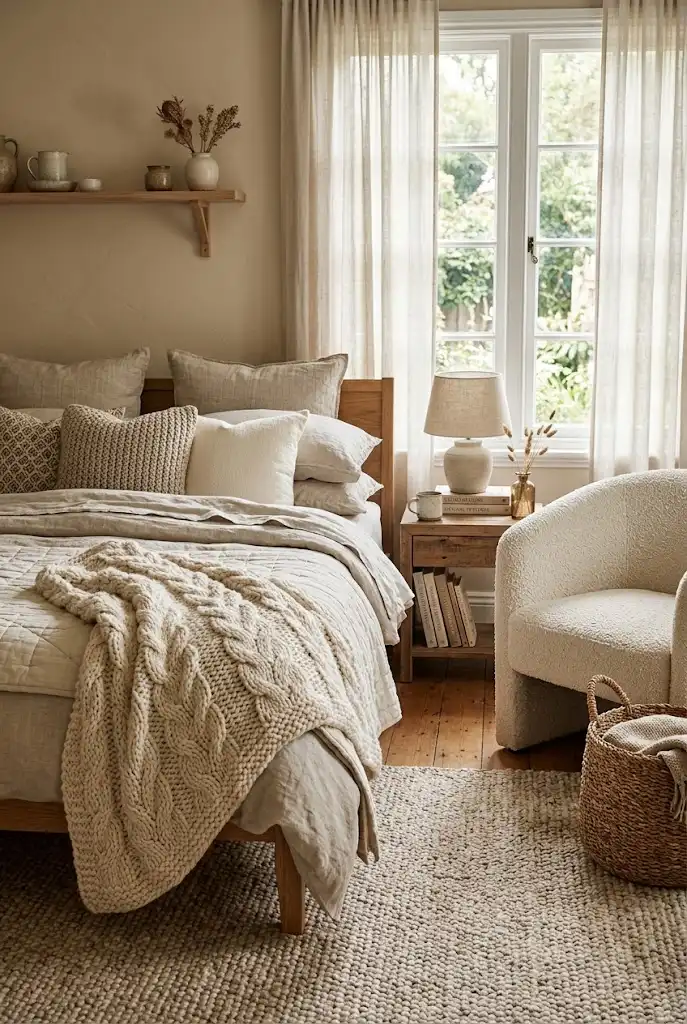
Texture gives a cozy bedroom depth even when the color palette is simple. Combine knitted throws, woven baskets, linen bedding, a textured rug, and perhaps a boucle accent chair. The key is to vary the texture without introducing too many unrelated colors. Natural materials work especially well with warm neutrals because they add interest while maintaining a relaxed feeling. Use the heavier textures toward the lower part of the room and softer fabrics around the bed. This technique is especially useful when decorating with a mostly monochromatic palette.
Use a Bench at the Foot of the Bed
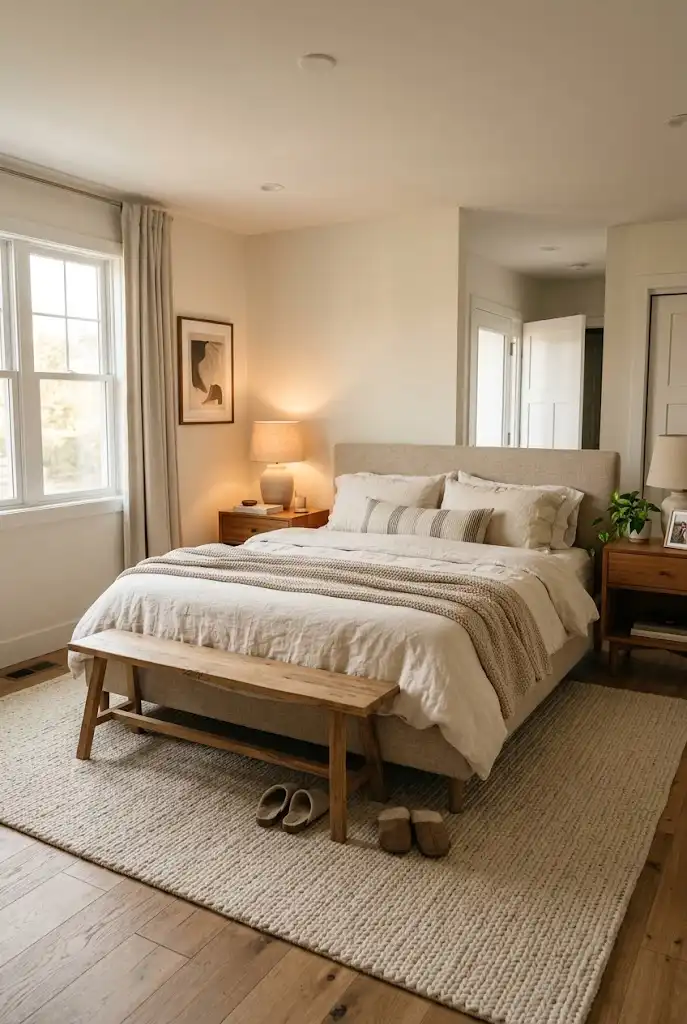
A bench at the foot of the bed can add both function and visual structure. In a spacious bedroom, choose a longer upholstered or wooden bench that follows the width of the bed without extending awkwardly into the walking path. In a smaller room, a narrow bench may provide seating without taking up too much space. It can also become a convenient place to fold a blanket or set out clothing. Select upholstery that complements the headboard or introduce a contrasting natural material such as wood. Always leave enough room around the bench for comfortable movement.
Create a Calm Monochromatic Palette
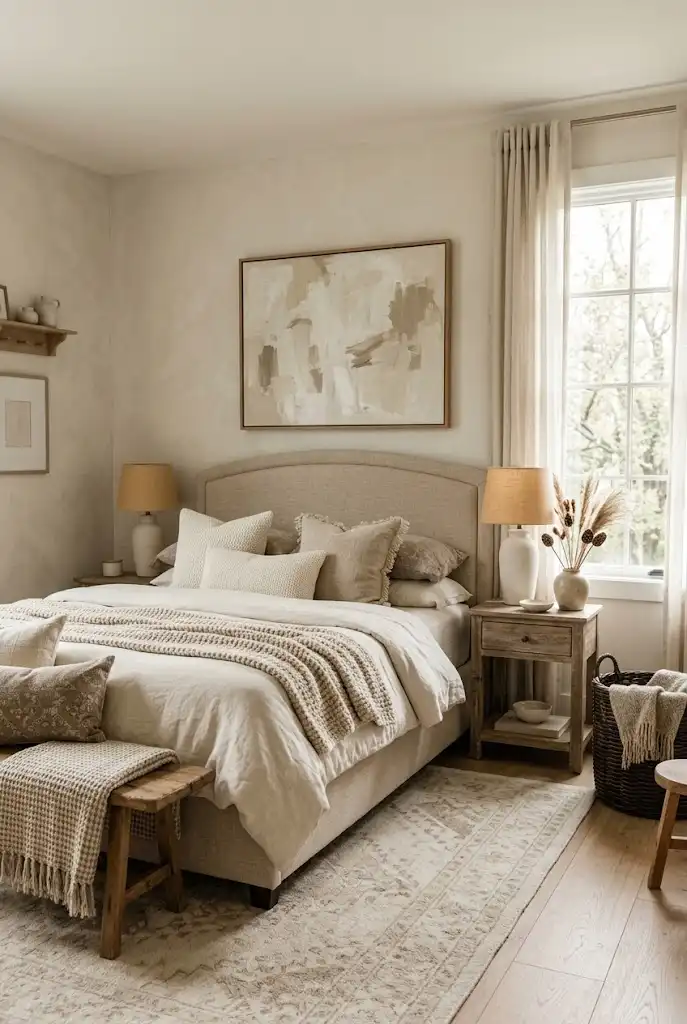
A monochromatic bedroom doesn’t have to feel boring. Choose one broad color family and vary the shades, materials, and textures within it. For example, combine ivory walls with cream bedding, beige upholstery, tan wood, and soft taupe accents. Because the colors are closely related, texture becomes especially important. Add visual interest through ribbed fabric, woven baskets, a patterned rug, or matte ceramics. This approach works particularly well for people who prefer a quiet bedroom without strong color contrasts.
Add a Simple Accent Wall
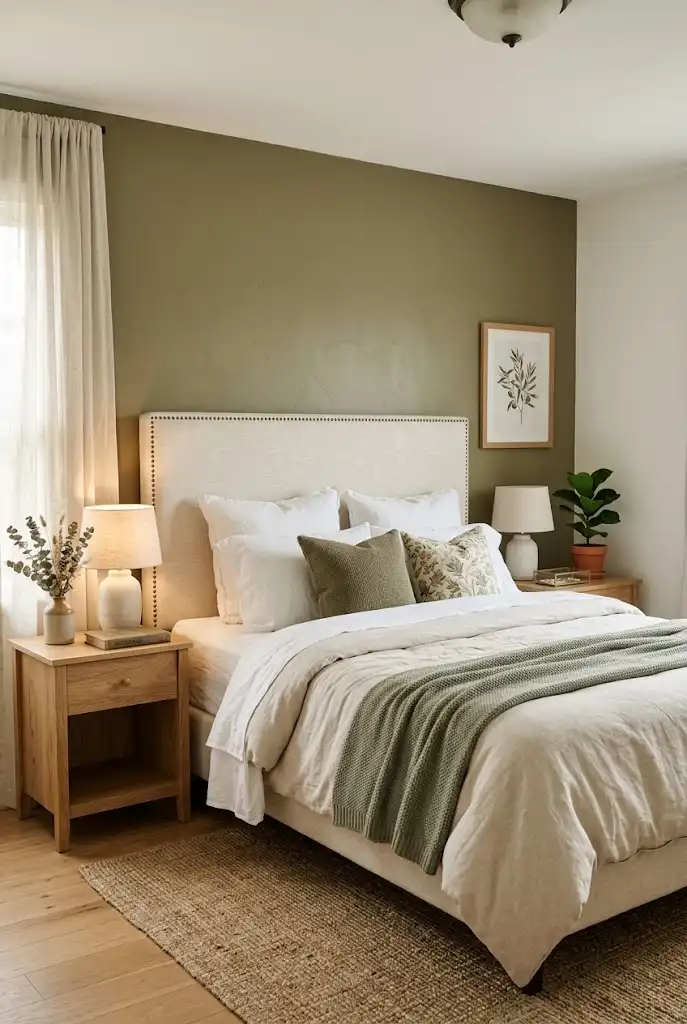
An accent wall behind the bed can create a strong focal point without requiring an entire-room makeover. Paint is the easiest option, but wallpaper, wood slats, applied molding, or textured wallcovering can also create a distinctive backdrop. Keep the rest of the room relatively restrained so the accent wall has room to work visually. For a rental, removable wallpaper may be an option where appropriate. Choose the wall behind the bed when possible because the bed naturally anchors the composition. Consider how the wall color interacts with both natural and artificial light before choosing the final finish.
Bring in a Touch of Greenery
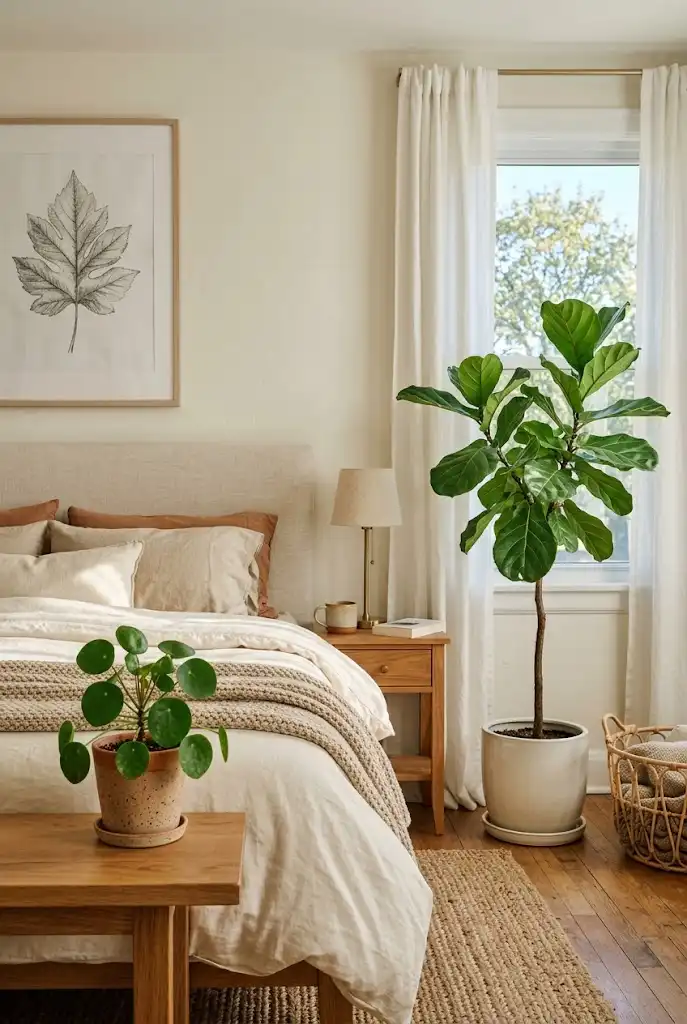
A little greenery can add life to a bedroom without overwhelming the decor. A small potted plant on a dresser, a leafy plant in a corner, or a simple vase of fresh stems can introduce a natural element. Choose plants and placement according to the actual light available in the room rather than treating every plant as interchangeable. If maintaining live plants isn’t practical, quality faux greenery can provide a similar visual accent. Keep containers simple and coordinated with the room’s materials. One or two well-placed plants usually look more intentional than filling every available surface.
Make a Small Bedroom Feel Cozy With Scale
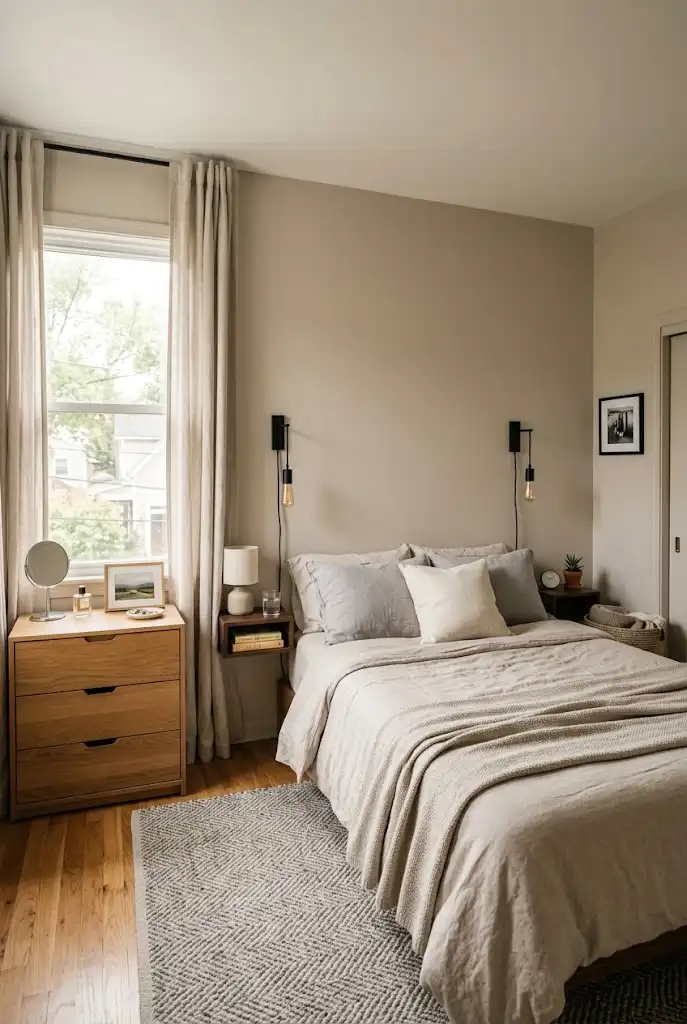
Small bedrooms can feel especially comfortable when furniture is chosen according to the available floor area. Instead of filling the room with oversized pieces, use a properly scaled bed, slim nightstands, wall-mounted lighting, and furniture with useful storage. Keep pathways clear so the room feels easy to move through. Light bedding and vertical curtains can help maintain an open visual impression, while one or two darker accents add definition. Use the wall space above the bed or beside the dresser for artwork instead of consuming valuable floor space. The goal isn’t to make every item tiny; it’s to create enough breathing room around each important piece.
Combine Dark Accents With Soft Textiles
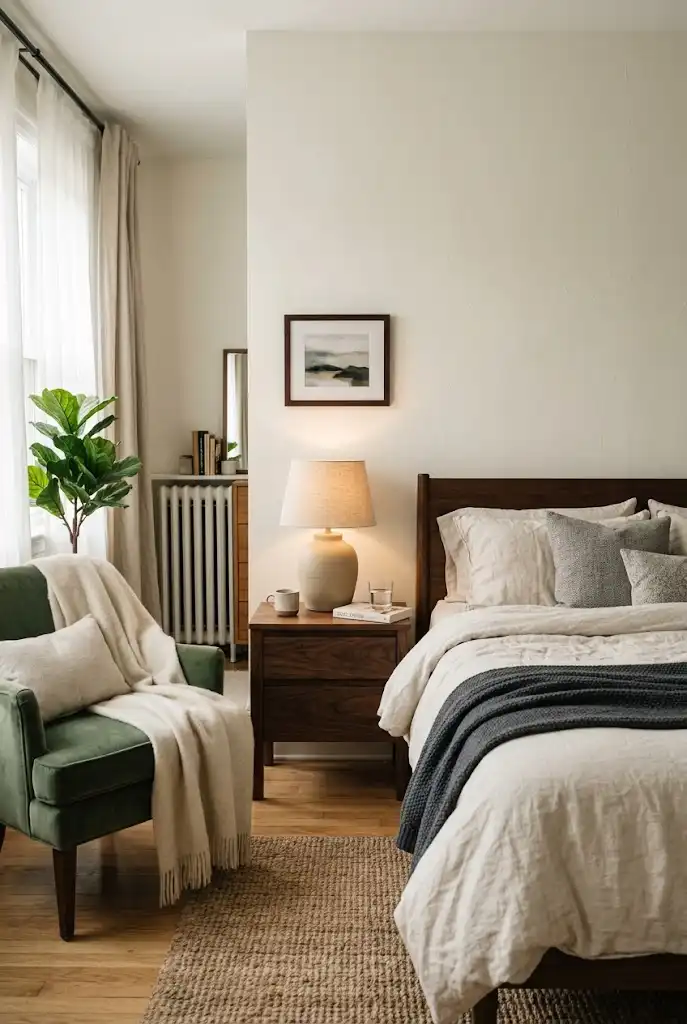
A cozy bedroom doesn’t have to be entirely light and neutral. Deep charcoal, espresso brown, muted navy, or forest green accents can add contrast and make lighter textiles feel richer. Use darker colors selectively through a nightstand, throw, artwork, lamp base, or small accent chair. Balance those pieces with soft cream or oatmeal textiles so the room doesn’t become visually heavy. This strategy works particularly well in rooms with good natural light, where darker accents can create depth without making the space feel closed in. Repeat the dark tone in two or three places for cohesion.
Finish With Personal Decorative Details
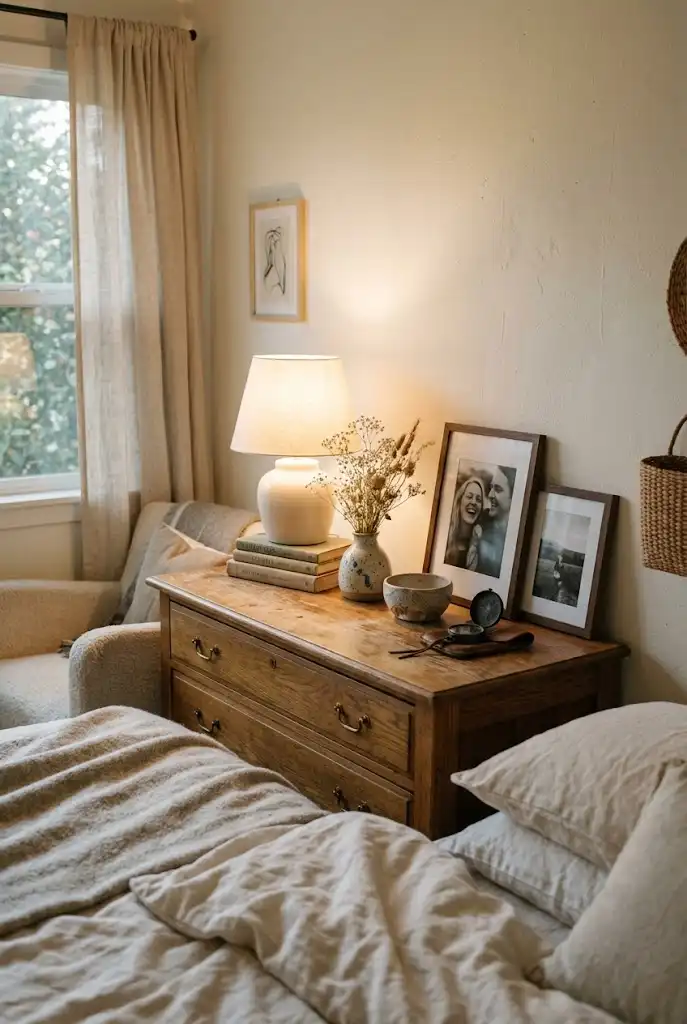
The final layer of coziness often comes from objects that make the bedroom feel personally meaningful. Display a few favorite books, framed photographs, a handmade ceramic piece, a small collection, or a sentimental object on a dresser or shelf. The key is editing: choose pieces that have meaning or visual value instead of filling every surface. Combine personal items with neutral basics so the room still feels calm. A bedroom should look lived in, but clutter can quickly undermine that atmosphere. Give special objects breathing room and let one or two pieces become focal points.